

At the University of Alberta, they have several decades of experience in the revitalization of Indigenous languages in the province and in many other parts of Canada. Among its numerous training initiatives, CILLDI (Canadian Indigenous Languages and Literacy Development Institute) has worked to systematize the foundations of skills training, drawing both on experiences developed within Canada and on a range of international initiatives.
Although they recognize that every language and every community has its own particular characteristics, several years ago they came to the conclusion that there is “no need to constantly reinvent the wheel”: when a community embarks on the revitalization of its language, it does not have to start from scratch, as there is already a wealth of experience in this field, both in Canada and around the world.
INSTILS (International Network for Skills Training in Intergenerational Language Sustainability) aims to connect these experiences through a network in order to share knowledge and training related to the sustainability of minoritized languages. It is an international academic and professional network that promotes collaboration around skills, expertise, and training experiences from across the world.
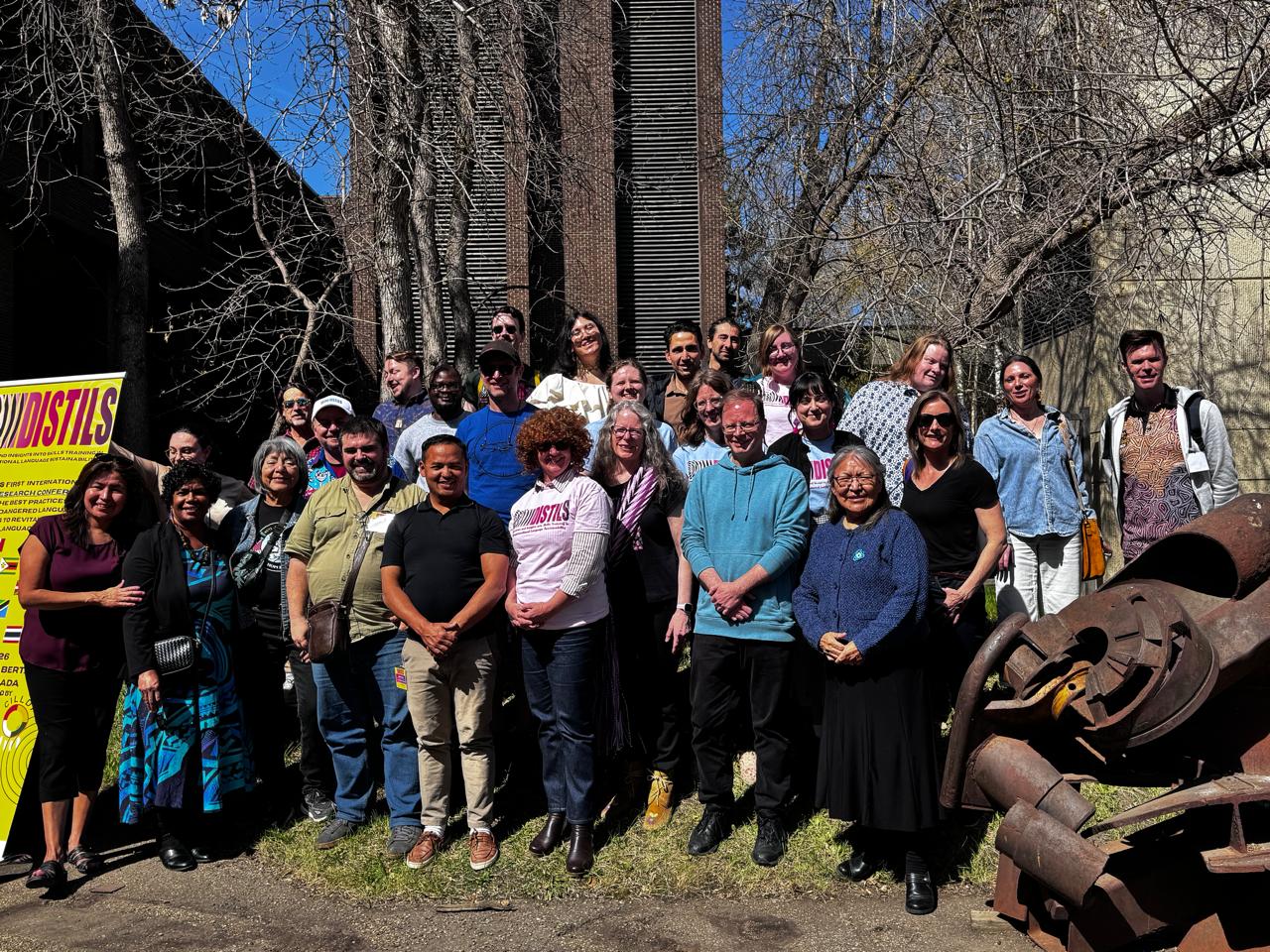
Building on the relationships developed over the past two years, the first gathering was held this year, bringing together associations, activists and researchers from around the world. Garabide was invited to deliver one of the event’s main presentations as a keynote speaker.
Urtzi Urrutikoetxea presented the association’s trajectory, the work it has carried out over the years, and the main projects it is currently developing.
Among these, the Basque language revitalization experience and Garabide’s work generated considerable interest. From the trajectory of the Aditu programme to future challenges and initiatives — such as the BIHAR Congress and the project to create a Federation of Languages Undergoing Revitalization — representatives from North and South America, Africa, Asia and Oceania expressed their interest in Garabide’s work.
Believing that INSTILS has the potential to become an important forum for building bridges between community-based work and academia, Garabide has decided to join the network. Indeed, INSTILS’s main areas of interest are closely aligned with the lines of work Garabide has been developing in recent years:
- Creating opportunities for communication and collaboration among trainers and organizations involved in ILS or intergenerational language transmission training.
- Researching best practices for the design and delivery of these training activities.
- Supporting the development of new training programmes in ILS or intergenerational language transmission, with the aim of reaching under-resourced communities around the world as well.
INSTILS currently has members from 16 countries. They include community-based language activists, researchers, educators and many others committed to strengthening intergenerational language transmission around the world.





 2020 Garabide